

 Violin
 sheilascorner Home
 Photography
 Websites
 World War 1
|
 I would like to ask you all this afternoon to come with me on an imagined historical visit to Cremona, so that we can try to understand something of the background to the working life of Giuseppe Guarneri del Gesù. I can almost guarantee that on this December day the whole of the flat plain of Lombardy is a pretty miserable place to be, and if you decided to climb the tower of the Cathedral in Cremona, which is the tallest in the whole of Italy, you would be most unlikely to have a view of anything but the damp, clinging fog that clogs the plain all winter long. You could walk the streets, some of them still cobbled, but except in the shopping area you would be short of com-pany and your footsteps would echo eerily in the dampness. No wonder someone wrote in the 1630s that "the violin cannot be brought to perfection without the strong heat of the sun". He could have added that winter doesn't do the mo-rale of the Cremonese people much good either. I would like to ask you all this afternoon to come with me on an imagined historical visit to Cremona, so that we can try to understand something of the background to the working life of Giuseppe Guarneri del Gesù. I can almost guarantee that on this December day the whole of the flat plain of Lombardy is a pretty miserable place to be, and if you decided to climb the tower of the Cathedral in Cremona, which is the tallest in the whole of Italy, you would be most unlikely to have a view of anything but the damp, clinging fog that clogs the plain all winter long. You could walk the streets, some of them still cobbled, but except in the shopping area you would be short of com-pany and your footsteps would echo eerily in the dampness. No wonder someone wrote in the 1630s that "the violin cannot be brought to perfection without the strong heat of the sun". He could have added that winter doesn't do the mo-rale of the Cremonese people much good either.
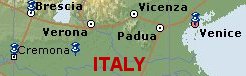 In summer it is hot, often very hot, and you would enjoy your visit, because even though the area where Stradivari, the Amatis and the Guarneris once worked has been drastically altered, there still remains much of the old atmosphere, especially in the area of the Cathedral square, but also in some of the old, narrow streets away from the city centre. Many times I have stood, and looked, and sniffed, and thought "Yes, this must be just how Stradivari or Guarneri knew it". I think their spirit lingers on. In summer it is hot, often very hot, and you would enjoy your visit, because even though the area where Stradivari, the Amatis and the Guarneris once worked has been drastically altered, there still remains much of the old atmosphere, especially in the area of the Cathedral square, but also in some of the old, narrow streets away from the city centre. Many times I have stood, and looked, and sniffed, and thought "Yes, this must be just how Stradivari or Guarneri knew it". I think their spirit lingers on.
  The first of the violin-making Guarneris, Andrea, the grandfather of Guarneri del Gesù, was born in 1626, survived the plague and entered Nicolo Amati's household as an apprentice before 1641, staying until 1645. In 1650 he re-turned as a qualified assistant, remaining until 1654, so that one can certainly say that Andrea Guarneri was well versed in the Amati methods and traditions before setting up in business on his own account. Yet he was anything but a slavish follower. His work never had quite the elegant perfection of his master's, rather from the first it had character, personality, the designs of the Amati fully comprehended but executed with sculptural strength rather than precision. `his visual personality reflects also in the tone of Andrea Guarneri's instruments, which have, as well as an immediately likable quality, a certain incisiveness not always found in an Amati. The first of the violin-making Guarneris, Andrea, the grandfather of Guarneri del Gesù, was born in 1626, survived the plague and entered Nicolo Amati's household as an apprentice before 1641, staying until 1645. In 1650 he re-turned as a qualified assistant, remaining until 1654, so that one can certainly say that Andrea Guarneri was well versed in the Amati methods and traditions before setting up in business on his own account. Yet he was anything but a slavish follower. His work never had quite the elegant perfection of his master's, rather from the first it had character, personality, the designs of the Amati fully comprehended but executed with sculptural strength rather than precision. `his visual personality reflects also in the tone of Andrea Guarneri's instruments, which have, as well as an immediately likable quality, a certain incisiveness not always found in an Amati.
 In 1698 Andrea Guarneri died, leaving as his principal heir in the Casa Guarneri his son Giuseppe, whom we know as Joseph filius Andreae. I would guess that envy of Stradivari played no great part in Joseph's life, and that they were good friends and colleagues. Both lived and worked a short stone's throw apart in the Piazza S. Domenico, and as Cremona was famous for its violins I am sure that in the early 1700s both houses were able to profit, even when foreign armies were encamped nearby. Probably Joseph's real friends were Antonio Stradivari's sons Francesco and Omobono, for in 1698 when his father died Joseph was thirty-two years old, Francesco Stradivari twenty-seven and Omobono nineteen. As we all know, Francesco and Omobono's part in the appearance of the final details of Antonio Stradivari's violins was a relatively minor one, and I think it may well be that the two sons endured far greater feelings of subservience and inferiority than anything felt by their neighbour Joseph filius Andreae, who was, after all, free to work how and when he wished. In 1698 Andrea Guarneri died, leaving as his principal heir in the Casa Guarneri his son Giuseppe, whom we know as Joseph filius Andreae. I would guess that envy of Stradivari played no great part in Joseph's life, and that they were good friends and colleagues. Both lived and worked a short stone's throw apart in the Piazza S. Domenico, and as Cremona was famous for its violins I am sure that in the early 1700s both houses were able to profit, even when foreign armies were encamped nearby. Probably Joseph's real friends were Antonio Stradivari's sons Francesco and Omobono, for in 1698 when his father died Joseph was thirty-two years old, Francesco Stradivari twenty-seven and Omobono nineteen. As we all know, Francesco and Omobono's part in the appearance of the final details of Antonio Stradivari's violins was a relatively minor one, and I think it may well be that the two sons endured far greater feelings of subservience and inferiority than anything felt by their neighbour Joseph filius Andreae, who was, after all, free to work how and when he wished.
 Any book published before the great Hill volume of 1931 will tell you that Giuseppe Guarneri del Gesù was not the son of Joseph filius Andreae, but a cousin born in 1683. The research that yielded this was carried out for Fetis, Vuillaume's friendly author, in the 1850s, and when it was shown in the 1880s that this Giuseppe had died in infancy another cousin of the same name was discovered, born in 1686. It was Giovanni Livi who found that this child too died young, and in collaboration with the Hills established established beyond any doubt that this Bartolomeo Giuseppe was in fact our man, with the Bartolomeo omitted on all the subsequent census returns. I mention this in some detail because this clear truth has still to be accepted by certain Italian writers, and even Fernando Sacconi used to cling to the old view that del Gesù was a nephew rather than a grandson of Andrea. Any book published before the great Hill volume of 1931 will tell you that Giuseppe Guarneri del Gesù was not the son of Joseph filius Andreae, but a cousin born in 1683. The research that yielded this was carried out for Fetis, Vuillaume's friendly author, in the 1850s, and when it was shown in the 1880s that this Giuseppe had died in infancy another cousin of the same name was discovered, born in 1686. It was Giovanni Livi who found that this child too died young, and in collaboration with the Hills established established beyond any doubt that this Bartolomeo Giuseppe was in fact our man, with the Bartolomeo omitted on all the subsequent census returns. I mention this in some detail because this clear truth has still to be accepted by certain Italian writers, and even Fernando Sacconi used to cling to the old view that del Gesù was a nephew rather than a grandson of Andrea.
 Returning in our daydream to Cremona, we can try to imagine Joseph filius Andreae's sons growing up in their simple but not insubstantial house at the edge of the Piazza S. Domenico, the smells of worked wood, Italian cooking and nonexistant plumbing mingling with the smoke of the fire and, in summer, the scent of the master's varnish. The youngsters were doubtless brought out to meet numerous musicians, but it would be surprising if the two future violin-makers didn't spend a lot of time playing at soldiers as well, for early in 1702 Cremona became the battleground of the War of the Spanish Succession. Under Prince Eugene of Savoy the Habsburg army succeeded by various strategems in penetrating the defences of the city, which held a strategically dominating position by the River Po, in fact it was the only place where the river could be crossed. The French troops were driven off, but the war rumbled on for several years, and by the peace treaty of Milan in 1707 Lombardy became an Austrian province, with Cremona the headquarters of the Austrian troops. Returning in our daydream to Cremona, we can try to imagine Joseph filius Andreae's sons growing up in their simple but not insubstantial house at the edge of the Piazza S. Domenico, the smells of worked wood, Italian cooking and nonexistant plumbing mingling with the smoke of the fire and, in summer, the scent of the master's varnish. The youngsters were doubtless brought out to meet numerous musicians, but it would be surprising if the two future violin-makers didn't spend a lot of time playing at soldiers as well, for early in 1702 Cremona became the battleground of the War of the Spanish Succession. Under Prince Eugene of Savoy the Habsburg army succeeded by various strategems in penetrating the defences of the city, which held a strategically dominating position by the River Po, in fact it was the only place where the river could be crossed. The French troops were driven off, but the war rumbled on for several years, and by the peace treaty of Milan in 1707 Lombardy became an Austrian province, with Cremona the headquarters of the Austrian troops.
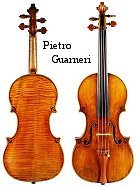 In those days it was normal for a child to start work in an apprenticeship at the age of eleven or twelve, and with violinmaking in their blood we can imagine young Pietro and then Giuseppe receiving their first instruction with enthusiasm. By about 1710 they would both have been so engaged, and in 1715 Pietro was already a young man of twenty years. I have seen violins of the period by Joseph filius Andreae in which there may have been just a hint of Pietro's hand, but only one in which I felt it could be detected through and through, and that was the superb instrument belonging twenty years ago to Arthur Grumiaux, which I have since lost track of. In those days it was normal for a child to start work in an apprenticeship at the age of eleven or twelve, and with violinmaking in their blood we can imagine young Pietro and then Giuseppe receiving their first instruction with enthusiasm. By about 1710 they would both have been so engaged, and in 1715 Pietro was already a young man of twenty years. I have seen violins of the period by Joseph filius Andreae in which there may have been just a hint of Pietro's hand, but only one in which I felt it could be detected through and through, and that was the superb instrument belonging twenty years ago to Arthur Grumiaux, which I have since lost track of.
I would now like to consider briefly the possibility of a working relationship between the remaining Guarneris and that other great Cremonese craftsman, 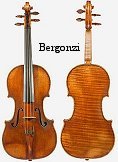 Carlo Bergonzi. Carlo was born in 1683, and when the Hills published their great work on Antonio Stradivari in 1902 they took him to be Stradivari's pupil. By the time the Guarneri book appeared in 1931 they had changed their minds, seeing Carlo as more likely a pupil of Joseph filius Andreae. After much pondering over the years my own feeling is that the Hills were nearer the mark the first time, and that Carlo assisted the Stradivaris, certainly in the 1720s and possibly earlier. I doubt, however, if he was originally a direct pupil. Violin labels are not much help in determining any of this - there are hardly any original Bergonzi labels, the earliest known to me being dated 1733, and although it am sure there must have been a lot of Stradivari shop labels - "sotto la disciplina d'An-tonio Stradivari" - almost all have been replaced for reasons of commerce. I think if we are ever to discover the truth about Carlo Bergonzi's position it will be found among the archives which are currently being diligently searched by Duane Ro-sengard and Carlo Chiesa, and from that direction we already have hints that Bergonzi was friendly with the Rugeri family in the early 1700s. Carlo Bergonzi. Carlo was born in 1683, and when the Hills published their great work on Antonio Stradivari in 1902 they took him to be Stradivari's pupil. By the time the Guarneri book appeared in 1931 they had changed their minds, seeing Carlo as more likely a pupil of Joseph filius Andreae. After much pondering over the years my own feeling is that the Hills were nearer the mark the first time, and that Carlo assisted the Stradivaris, certainly in the 1720s and possibly earlier. I doubt, however, if he was originally a direct pupil. Violin labels are not much help in determining any of this - there are hardly any original Bergonzi labels, the earliest known to me being dated 1733, and although it am sure there must have been a lot of Stradivari shop labels - "sotto la disciplina d'An-tonio Stradivari" - almost all have been replaced for reasons of commerce. I think if we are ever to discover the truth about Carlo Bergonzi's position it will be found among the archives which are currently being diligently searched by Duane Ro-sengard and Carlo Chiesa, and from that direction we already have hints that Bergonzi was friendly with the Rugeri family in the early 1700s.
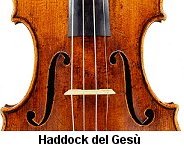 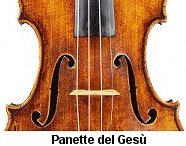 The actual workmanship of these narrow-waisted instruments is not particularly neat, and although in his later years Joseph del Gesù never made a point of neatness for its own sake I rather suspect that his father may still have been responsible for quite a lot of what we see. It is the concept of these violins that is so different and, as I have said, the tonal result, and I think we are safe in giving most of the credit for that to the young man whose life we are celebrating here. The actual workmanship of these narrow-waisted instruments is not particularly neat, and although in his later years Joseph del Gesù never made a point of neatness for its own sake I rather suspect that his father may still have been responsible for quite a lot of what we see. It is the concept of these violins that is so different and, as I have said, the tonal result, and I think we are safe in giving most of the credit for that to the young man whose life we are celebrating here.
 Duane Rosengard tells us that at the time of the 1730 census Joseph senior was in hospital. Joseph junior was, as I have said, still absent and no-one knows where. Brooding on all of this I have come to wonder if 1731 may have been the year when Joseph filius Andreae more or less retired, leaving his son to head the business, such as it was, and with the right to insert his own label. Hieronymus Amati made instruments that bore his father's label for more than fifteen years before Nicolo died aged eighty-eight, and that was the normal custom, but in the fractious Guarneri family who knows what jealousies and resentments may have grown, perhaps with a negative effect on productivity until the energetic son was able to place his own name in his instruments and reap the lion's share of their modest financial reward. It may be significant that the family's patron saint, Teresa, mentioned on the labels of Andrea Guarneri, Peter of Mantua and Joseph filius, was dropped on the labels of the younger Joseph in favour of the IHS with cross symbol which is associated with the Gesùits, among oth-ers, and which gave rise to the nickname "del Gesù". This is pure speculation on my part, but until firm evidence surfaces it may have circumstantial value. Duane Rosengard tells us that at the time of the 1730 census Joseph senior was in hospital. Joseph junior was, as I have said, still absent and no-one knows where. Brooding on all of this I have come to wonder if 1731 may have been the year when Joseph filius Andreae more or less retired, leaving his son to head the business, such as it was, and with the right to insert his own label. Hieronymus Amati made instruments that bore his father's label for more than fifteen years before Nicolo died aged eighty-eight, and that was the normal custom, but in the fractious Guarneri family who knows what jealousies and resentments may have grown, perhaps with a negative effect on productivity until the energetic son was able to place his own name in his instruments and reap the lion's share of their modest financial reward. It may be significant that the family's patron saint, Teresa, mentioned on the labels of Andrea Guarneri, Peter of Mantua and Joseph filius, was dropped on the labels of the younger Joseph in favour of the IHS with cross symbol which is associated with the Gesùits, among oth-ers, and which gave rise to the nickname "del Gesù". This is pure speculation on my part, but until firm evidence surfaces it may have circumstantial value.
 1731 was not only the year of Joseph filius' last known label and the first of del Gesù's that I have been absolutely sure of, but also the great turning point in the younger man's life. For one thing he was back in the centre of Cremona, a married man. For another he stood now on the threshold of his brief but stupendous career, at the end of what we would today call the research and development stage and embarking on that extraordinary series of truly amazing violins, of which most of the very best are currently under this roof. How could he himself, brimming now with determination and energy, have assessed his prospects in 1731? I would certainly assume that he was greatly in awe of Antonio Stradivari, even if he didn't admit it publicly. In 1731Stradivari was eighty-seven years young and from the evidence of his instruments still very much himself, although much assisted by his sons, who were themselves not exactly youthful, Francesco sixty and Omobono fifty-two. But our man must have known from players that there was still an opportunity to produce a great tonal result different from Stradivari's, perhaps even more powerful, combining the best of Stradivari with that elusive quality and response that existed in the old Brescians. This was, I am sure, to be the guiding ambition of Guarneri del Gesù's career, and with stunning virtuosity he achieved it. 1731 was not only the year of Joseph filius' last known label and the first of del Gesù's that I have been absolutely sure of, but also the great turning point in the younger man's life. For one thing he was back in the centre of Cremona, a married man. For another he stood now on the threshold of his brief but stupendous career, at the end of what we would today call the research and development stage and embarking on that extraordinary series of truly amazing violins, of which most of the very best are currently under this roof. How could he himself, brimming now with determination and energy, have assessed his prospects in 1731? I would certainly assume that he was greatly in awe of Antonio Stradivari, even if he didn't admit it publicly. In 1731Stradivari was eighty-seven years young and from the evidence of his instruments still very much himself, although much assisted by his sons, who were themselves not exactly youthful, Francesco sixty and Omobono fifty-two. But our man must have known from players that there was still an opportunity to produce a great tonal result different from Stradivari's, perhaps even more powerful, combining the best of Stradivari with that elusive quality and response that existed in the old Brescians. This was, I am sure, to be the guiding ambition of Guarneri del Gesù's career, and with stunning virtuosity he achieved it.
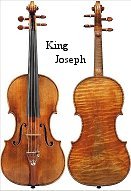 Roger Hargrave explained this morning that no changes were necessary to the basic Cremonese design, but I still see Guarneri striving towards a sort of Amatise Gasparo da Salò, with archings resembling those of Stradivari, as Roger again demonstrated, and a thicknessing system combining both schools. This I believe is where he began, quite soon adjusting his soundhole design to be more Brescian than Cremonese as well: more than a hint of this new soundhole can be seen with the "Dancla" example in this exhibition, which in turn is identical to that of the wasp-waisted violin here. But his instruments are invariably much more than just a carefully thoughtout change of detail. Each of them appears to me to be an inspired three-dimensional work of art, visually a reflection of its maker's mood of the moment and at the same time supremely successful in its tonal result. Sometimes Guarneri seems to be leading a relatively settled existence - the "Kreisler" and "King" violins are examples of this, full of character, but carefully thought out and executed. But then look at the freer outline of the "Violon du Diable" and its companion of 1734, the "Haddock", developed from the earlier "Baltic". And then consider the delicate, almost feminine "D'Egville" of 1735 and the strong, slightly more masculine "Plowden" of the same year, happily reunited in the same ownership after a hundred years apart. And what wonderful varnish they all have!
In 1739 or 40 Joseph Guarneri filius Andreae died, and a document discovered by Livi confirms that father and son had been living and working apart since the early 1720s. I said ear-lier that Joseph filius was in my opinion one of the very greatest scroll carvers, and I am in no doubt that the association of father and son had continued in as far as he made many of the scrolls for del Gesù's violins up to and including 1739, since the proportions and cut are clearly recog-nisable from the instruments of his earlier years. Others I suspect may have been made by the father originally, but were gone over by the son for one reason or another, sometimes perhaps because he felt them too heavy in appearance for his more delicate-looking violin bodies. Other scrolls, up to about 1734, were developments of the con-cept seen in the transitional period, and which I described as weaker than those of the father. A significant characteristic of this latter type, which I believe to be the work of del Gesù himself, is the narrow second turn with correspondingly long ears when the volute is viewed from the front - the "Dancla", "Stretton" and "Baltic" are typical. A number of violins made in the early thirties have scrolls of this type, including the one in Cremona and the "Rode" of 1734, and they begin again in 1740 after Joseph senior's death, though in much rougher form, changing gradually but dramatically until we arrive at the extreme yet remarkable "Leduc". Roger Hargrave explained this morning that no changes were necessary to the basic Cremonese design, but I still see Guarneri striving towards a sort of Amatise Gasparo da Salò, with archings resembling those of Stradivari, as Roger again demonstrated, and a thicknessing system combining both schools. This I believe is where he began, quite soon adjusting his soundhole design to be more Brescian than Cremonese as well: more than a hint of this new soundhole can be seen with the "Dancla" example in this exhibition, which in turn is identical to that of the wasp-waisted violin here. But his instruments are invariably much more than just a carefully thoughtout change of detail. Each of them appears to me to be an inspired three-dimensional work of art, visually a reflection of its maker's mood of the moment and at the same time supremely successful in its tonal result. Sometimes Guarneri seems to be leading a relatively settled existence - the "Kreisler" and "King" violins are examples of this, full of character, but carefully thought out and executed. But then look at the freer outline of the "Violon du Diable" and its companion of 1734, the "Haddock", developed from the earlier "Baltic". And then consider the delicate, almost feminine "D'Egville" of 1735 and the strong, slightly more masculine "Plowden" of the same year, happily reunited in the same ownership after a hundred years apart. And what wonderful varnish they all have!
In 1739 or 40 Joseph Guarneri filius Andreae died, and a document discovered by Livi confirms that father and son had been living and working apart since the early 1720s. I said ear-lier that Joseph filius was in my opinion one of the very greatest scroll carvers, and I am in no doubt that the association of father and son had continued in as far as he made many of the scrolls for del Gesù's violins up to and including 1739, since the proportions and cut are clearly recog-nisable from the instruments of his earlier years. Others I suspect may have been made by the father originally, but were gone over by the son for one reason or another, sometimes perhaps because he felt them too heavy in appearance for his more delicate-looking violin bodies. Other scrolls, up to about 1734, were developments of the con-cept seen in the transitional period, and which I described as weaker than those of the father. A significant characteristic of this latter type, which I believe to be the work of del Gesù himself, is the narrow second turn with correspondingly long ears when the volute is viewed from the front - the "Dancla", "Stretton" and "Baltic" are typical. A number of violins made in the early thirties have scrolls of this type, including the one in Cremona and the "Rode" of 1734, and they begin again in 1740 after Joseph senior's death, though in much rougher form, changing gradually but dramatically until we arrive at the extreme yet remarkable "Leduc".
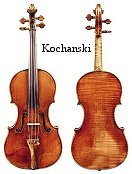 Aaron Ro-sand's "Kochanski" follows on from the "Ysaye" but the "Vieuxtemps" seems to stand an its own. You can see in the "Vieuxtemps" the Brescian influence taken to an extreme in the fullness, almost bumpiness, of the arching near the edge, and in the outline, which seems to come straight from Gasparo da Salò. Aaron Ro-sand's "Kochanski" follows on from the "Ysaye" but the "Vieuxtemps" seems to stand an its own. You can see in the "Vieuxtemps" the Brescian influence taken to an extreme in the fullness, almost bumpiness, of the arching near the edge, and in the outline, which seems to come straight from Gasparo da Salò.
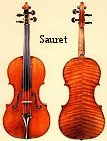
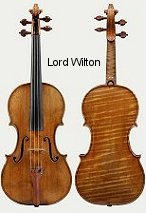 The "Lord Wilton", named after an owner who inherited his title, is now owned by Lord Menuhin, who has earned his with a lifetime of music, wisdom and good works. It shows del Gesù making a superb musical instrument while in his most eccentric mood - the "Paganini" seems almost restrained in comparison, except in the massively open volute of its scroll. The "Carro-dus" and the "Sauret", the "Doyen" and the "Ole Bull" all show differing but exciting moods, and finally there is the splendid "Leduc", its sound-holes as carefully cut as any, yet when you first see the scroll you don't know whether to laugh or cry. The "Lord Wilton", named after an owner who inherited his title, is now owned by Lord Menuhin, who has earned his with a lifetime of music, wisdom and good works. It shows del Gesù making a superb musical instrument while in his most eccentric mood - the "Paganini" seems almost restrained in comparison, except in the massively open volute of its scroll. The "Carro-dus" and the "Sauret", the "Doyen" and the "Ole Bull" all show differing but exciting moods, and finally there is the splendid "Leduc", its sound-holes as carefully cut as any, yet when you first see the scroll you don't know whether to laugh or cry.
 but since his labour was so unrewarded unrewarded financially I suspect he may have had plenty of thoughts about the unfairness of life when he was away from the workbench. I wonder if, after his father's death, del Gesù's violins may have had in them increasingly something of a protest, a very hot-blooded protest, against the classical disciplines and neatness of finish that had characterised almost two hundred years of Amati-inspired Cremonese violinmaking.
Guarneri del Gesù was buried an 17th October, 1744, cause of death not noted, and thus in the space of seven years the world lost not only him and his father, but also Antonio Stradivari and his two sons, and those five were followed by Carlo Bergonzi in 1747. It was an abrupt end to the great age of Cremonese violin-making. but since his labour was so unrewarded unrewarded financially I suspect he may have had plenty of thoughts about the unfairness of life when he was away from the workbench. I wonder if, after his father's death, del Gesù's violins may have had in them increasingly something of a protest, a very hot-blooded protest, against the classical disciplines and neatness of finish that had characterised almost two hundred years of Amati-inspired Cremonese violinmaking.
Guarneri del Gesù was buried an 17th October, 1744, cause of death not noted, and thus in the space of seven years the world lost not only him and his father, but also Antonio Stradivari and his two sons, and those five were followed by Carlo Bergonzi in 1747. It was an abrupt end to the great age of Cremonese violin-making.
 This is the text of a speech given by Charles Beare on the occasion of the December 1994 exhibition "The Violin Masterpieces of Guarneri del Gesu" at the Metropolitan Museum of Art in New York City. This appears on Sheila's Corner by kind permission of Charles Beare. This is the text of a speech given by Charles Beare on the occasion of the December 1994 exhibition "The Violin Masterpieces of Guarneri del Gesu" at the Metropolitan Museum of Art in New York City. This appears on Sheila's Corner by kind permission of Charles Beare.
Click here! And read more about the genealogy of the great violin families
|

 |
~ website and graphics © Sheila K. Helser ~
graphics not available for download or use in a collection return to sheilascorner.com |