

 Violin
 sheilascorner Home
 Photography
 Websites
 World War 1
Unaccompanied Sonatas and Partitas
|
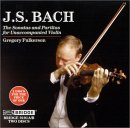 We visit the concert hall for many reasons, but chief among them the hope that our lives may be made richer and perhaps even justified by aural communion with transcendent human imaginations. Such a transcendent genius was Bach. His works have spoken to every cycle of musical taste with the exception of the one which directly followed him, and even in the Classical era the greatest composers knew and admired his work. Formalists are swayed by his complex motivic and structural relationships and Byronic dreamers cannot resist the chromatic dissonances with their pregnant emotional implications. Conservative musical scholars feel vindicated by his orderly setting out of rules of counterpoint; avant-gardists revel in the ways in which he broke each one. We visit the concert hall for many reasons, but chief among them the hope that our lives may be made richer and perhaps even justified by aural communion with transcendent human imaginations. Such a transcendent genius was Bach. His works have spoken to every cycle of musical taste with the exception of the one which directly followed him, and even in the Classical era the greatest composers knew and admired his work. Formalists are swayed by his complex motivic and structural relationships and Byronic dreamers cannot resist the chromatic dissonances with their pregnant emotional implications. Conservative musical scholars feel vindicated by his orderly setting out of rules of counterpoint; avant-gardists revel in the ways in which he broke each one.
The Composition of the Sonatas and Partitas for Unaccompanied Violin
Previous Unaccompanied Violin Music in Germany The task of writing for a violin unaccompanied had been tackled previously by German composers as early as 1674 with the Passacaglia of Heinrich von Biber (1644 - 1704), and continuing with Johann Paul von Westhoff (1656 - 1705) who made a sensation in 1682 performing his Suite for solo violin at the French royal court, and later published Six Partitas for solo violin (1696), each in four movements. Westhoff was in Weimar at the end of his life, and Bach probably knew these works through personal contact with him there. Both Biber and Westhoff were adept at double stopping to a remarkable degree. Finally, Pisendel's Sonata a violino solo senza basso (1716) may be the direct inspiration for Bach's set. A comparison with Pisendel's sonata shows that Bach's most important advance was his compositional technique. By the melodic independence of each contrapuntal line and the complexity of voice-leading relationships, Bach creates the illusion of complete harmony both in polyphonic and in single line music. Bach's interest in Italian music led him to combine the austere complexity of these German antecedents with the emotionally direct Italian style. The fruits of Bach's labors are three Sonatas, of increasing severity, and three Partitas, of correspondingly increasing gaiety. The task of writing for a violin unaccompanied had been tackled previously by German composers as early as 1674 with the Passacaglia of Heinrich von Biber (1644 - 1704), and continuing with Johann Paul von Westhoff (1656 - 1705) who made a sensation in 1682 performing his Suite for solo violin at the French royal court, and later published Six Partitas for solo violin (1696), each in four movements. Westhoff was in Weimar at the end of his life, and Bach probably knew these works through personal contact with him there. Both Biber and Westhoff were adept at double stopping to a remarkable degree. Finally, Pisendel's Sonata a violino solo senza basso (1716) may be the direct inspiration for Bach's set. A comparison with Pisendel's sonata shows that Bach's most important advance was his compositional technique. By the melodic independence of each contrapuntal line and the complexity of voice-leading relationships, Bach creates the illusion of complete harmony both in polyphonic and in single line music. Bach's interest in Italian music led him to combine the austere complexity of these German antecedents with the emotionally direct Italian style. The fruits of Bach's labors are three Sonatas, of increasing severity, and three Partitas, of correspondingly increasing gaiety.
The Importance of the Order of the Sonatas and Partitas Sonata no. 1 in g minor Partita no. 1 in b minor Sonata no. 2 in a minor
Partita no. 2 in d minor Sonata no. 3 in C major Partita no. 3 in E major Sonata no. 1 in g minor Partita no. 1 in b minor Sonata no. 2 in a minor
Partita no. 2 in d minor Sonata no. 3 in C major Partita no. 3 in E major
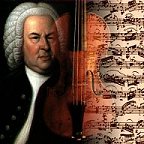 Bach as a Violinist - One point which has been debated over the years is the level of Bach's own violin playing and in particular whether he or anybody else at that time was good enough to play these pieces. I suggest three arguments in support of his performance ambition: First of all, there are fingerings in the manuscripts, which indicates that practical performance was at some point attempted. Secondly, I find it incredible that anybody could look at Bach's education and job history and assume that he was anything less than an excellent violinist. His first instrument was the violin - he began with his father at the age of six, before studying any keyboard instruments. He worked his way through school playing the violin, his first employment after school was as a violinist, and just prior to his position in Cöthen he was employed as Konzertmeister in Weimar, a court with a rich violin tradition. His keyboard writing certainly is testimony to the general physical co-ordination of his fingers, and we know from today's young virtuosi the residual ease of technique which comes from early study. He probably did not have the brilliance of more celebrated virtuosi; in particular the solo sonata by Pisendel demands more ease in high positions than Bach requires, the ability to stretch a tenth, and also some tricks of staccato bowing. The most salient difficulty in Bach's pieces is the complexity of his unusual double stopping, which take full advantage of closed positions. But this had been part of German violin tradition since Biber, and that is the third point: that many of the physical difficulties that later (Italian-trained) violinists have found in these pieces were not necessarily so problematic for Bach, who seems to have been quite at home with the most complicated left hand movements. In my opinion these pieces were definitely intended for practical performance. Bach as a Violinist - One point which has been debated over the years is the level of Bach's own violin playing and in particular whether he or anybody else at that time was good enough to play these pieces. I suggest three arguments in support of his performance ambition: First of all, there are fingerings in the manuscripts, which indicates that practical performance was at some point attempted. Secondly, I find it incredible that anybody could look at Bach's education and job history and assume that he was anything less than an excellent violinist. His first instrument was the violin - he began with his father at the age of six, before studying any keyboard instruments. He worked his way through school playing the violin, his first employment after school was as a violinist, and just prior to his position in Cöthen he was employed as Konzertmeister in Weimar, a court with a rich violin tradition. His keyboard writing certainly is testimony to the general physical co-ordination of his fingers, and we know from today's young virtuosi the residual ease of technique which comes from early study. He probably did not have the brilliance of more celebrated virtuosi; in particular the solo sonata by Pisendel demands more ease in high positions than Bach requires, the ability to stretch a tenth, and also some tricks of staccato bowing. The most salient difficulty in Bach's pieces is the complexity of his unusual double stopping, which take full advantage of closed positions. But this had been part of German violin tradition since Biber, and that is the third point: that many of the physical difficulties that later (Italian-trained) violinists have found in these pieces were not necessarily so problematic for Bach, who seems to have been quite at home with the most complicated left hand movements. In my opinion these pieces were definitely intended for practical performance.

|
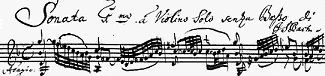
 Sonata no. 1 in g minor BWV 1001
 Thank you Gregory Fulkerson for sharing his Bach. His CD (Unaccompanied Sonatas and Partitas of J. S. Bach) for violin has been released by
 |
~ website and graphics © Sheila K. Helser ~
graphics not available for download or use in a collection return to sheilascorner.com |